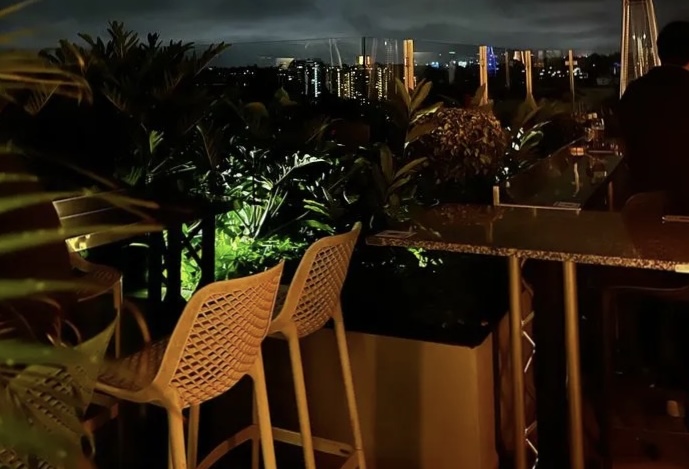
There’s a certain kind of honesty that only comes out after sunset in Nairobi. The city exhales. The traffic softens into a distant hum. Conversations stretch longer. Laughter gets looser. And somewhere—on a balcony, in a bedsitter, behind a half-closed door—a joint is lit. Not loudly. Not proudly. But consistently. Because in Nairobi, cannabis doesn’t live in headlines. It lives in the shadows.

The ritual. Simple. Intentional. Private. Every session in Nairobi is a session of trust. Photo by Kashu Cepha
The Culture You Don’t See—But It’s There
Cannabis in Kenya is illegal. That part is clear. What’s less obvious is how present it is. It moves through the city like an unspoken language—shared between creatives, hustlers, students, and professionals alike. Not in open cafés or polished dispensaries like in Los Angeles or Toronto—but in quiet circles, coded conversations, and trusted connections.
You don’t stumble into it. You’re introduced to it. And once you are, you begin to notice something: This isn’t chaos. It’s culture.

Stored quietly. Shared carefully. In Nairobi discretion is not a habit- it is a survival skill. Photo by Kashu Cephah
A City of Pressure—and Release
Nairobi is a city that demands everything from you—move fast, think faster, hustle harder. For many young people navigating that pressure—unemployment, ambition, identity—cannabis becomes less about rebellion and more about relief. It is the pause between survival and self-reflection, the silence in a city that never really goes quiet. But this isn’t the lazy stereotype often associated with weed culture; if anything, it’s the opposite. Some of the most driven, creative, and introspective minds in Nairobi are quietly part of this underground—designers sketching ideas mid-thought, writers chasing ideas they couldn’t catch before, developers coding through the night with headphones on and the world tuned out. It’s not an escape; it’s a shift.
The Risk That Never Leaves the Room
But let’s not romanticize it. Every session carries a shadow. In Kenya, being caught with cannabis can mean serious legal consequences, and that reality never fully disappears—even in the most relaxed setting. It lingers quietly in the background, like a guest no one invited but everyone acknowledges. And maybe that’s what makes Nairobi’s cannabis culture different: it isn’t loud, it isn’t commercial, and it isn’t curated for attention—it’s intentional.

Photo by Kashu Cephah
Not Just a Plant—A Perspective
Talk to enough people in these circles, and a pattern starts to emerge: cannabis isn’t just something they use—it’s something they think through. It becomes tied to conversations about mental health, creativity, freedom, policy, and quietly, hope for change. Globally, the narrative around cannabis is shifting; legalization debates are no longer fringe—they’ve become part of policy discussions, economic strategies, and broader cultural movements. And Nairobi? Nairobi is watching.

Kenya is the 6th largest cannabis market in Africa. Photo by Kashu Cepha
The Quiet Question Everyone Is Asking
What happens if the shadows disappear? What happens if a culture that has survived quietly is suddenly allowed to exist openly? Would it lose its intimacy, or finally gain its voice?
A Future Still Unwritten
For now, Nairobi’s cannabis culture remains what it has always been—unseen but alive, restricted yet resilient, illegal but undeniably present. And maybe that’s what makes it powerful. Because in a city where everything moves fast and loud, this is one culture that has mastered the art of moving quietly—and still growing.
Kashu Cepha is Head Magazine’s Africa -based correspondent. He is a multidisciplinary research writer, photographer, and AI enthusiast blending clear thinking with creative storytelling to capture real-life narratives. Founder of the Dunka Initiative Foundation, focused on advancing community growth through education, access, and long-term empowerment.
Editor’s Note: It is important to obey the laws where you live, especially concerning the use of cannabis and other drugs, and let nothing in this article be interpreted as a suggestion to do otherwise. Our policy advocates for following all laws in your area.