

The practice of ‘microdosing’ has evolved from fringe productivity trend to almost mainstream wellness protocol in the matter of a few short years. Recent data published from a nationally representative survey shows that 28% of U.S. adults have used at least one psychedelic in their lifetime, with 10 million U.S. adults (3% of the population) reporting that they’ve microdosed within the last year. Alongside this evolution of microdosing, around 30 U.S. states are actively weighing different psychedelic policy frameworks for potential legislation, with four states already having signed some measure of access program into law.
However, while the national conversation around psychedelic policy and regulated psilocybin access dominates much of psychedelic media coverage, the fact of the matter is that microdosing brands are already responding to substantial market interest worldwide. This takes the real conversation out of the highly curated and regional government-sanctioned narrative around state and federal level policy and into the active real-world scenario where a multibillion-dollar global industry is already fully entrenched and operating like a tech startup ecosystem.
There are already full-fledged psilocybin mushroom dispensary storefronts across the U.S. that are operating in broad daylight, and which have been openly advertising and serving their communities since at least 2020.

Photo courtesy of Dennis Walker
For example, Sublime Shrooms recently opened in Ann Arbor, Michigan and has been covered in local media alongside multiple other active mushroom dispensaries. Residents can also visit the nearby Spores Cafe — A September 2025 article in the Michigan Daily states that “The space is intended to be grab-and-go, with no seating inside. Aside from drinks, customers can also buy ‘magic mushroom’-infused products including chocolate bars, gummies, drink mixes and capsules.”
In major cities across the U.S., an increasing number of microdose-enhanced live events are also becoming commonplace. In October of 2024, the Los Angeles Times even reported on a psilocybin mushroom microdose-enhanced yoga class provided by a brand called Personalized Wellbeing that has an in-house magic mushroom product line called Psilouette, both named in the article alongside the brand founder who uses his real name.

This same brand has been covered in Esquire and numerous other publications ranging back to May of 2024. Beyond these mushroom dispensaries and live events are the hundreds of different psychedelic churches that claim psilocybin as their sacrament and operate from coast to coast. Some of the congregation sizes of these churches reach into the hundreds of thousands of people, while also effectively operating as a mushroom dispensary with access to branded microdosing (and macrodose sized) products like infused chocolates and capsules.
We haven’t even started discussing the online storefront and express delivery service psilocybin product market yet, which is orders of magnitude larger and more established than the aforementioned brick and mortar dispensary and church psilocybin product landscape.
Beyond this threshold, the bigger story is that this market has not only gained a foothold in the United States — it is truly global and fully operational.
Today we’ll take a look at some of the brands that are at the forefront of this frontier market in different parts of the world.
(Note: Psilocybin regulation and law varies drastically across international jurisdictions and individuals are responsible for knowing their local laws. This article is for informational and educational purposes only)

Serenité Labs (U.S.)
Serenité Labs has emerged as an increasingly prolific and respected mushroom microdose provider, with a variety of single-strain and lab-tested mushroom strains in their product portfolio. Selections include DC Mac mushrooms, Albino PE capsules, and numerous other specialty strains. Serenité has built a reputation for themselves as being the go-to provider for batch-tested and consistent mushroom microdoses that deliver every time. Of particular interest is the measures they are deploying to incorporate consumer feedback into a ‘personalized experience’ system which accumulates data from user input and ranks each strain based on the subjective experiences that people report from their microdosing protocol with the products.

Utopia Mushroom Co (Canada)
Utopia Mushroom Co. is a Canadian-based company that specializes in psychedelic wellness, specifically the sale of premium psilocybin mushroom products, adaptogenic mushroom blends, and functional mushroom derivatives. Operating primarily out of Vancouver, British Columbia, the brand offers microdose capsules, teas, and extracts designed for focus, energy, and mental wellness. Utopia has become the go-to microdosing supplement in the Canadian market, with outstanding customer reviews and personalized customer service in an era of automated and AI responses.

Mabel (Netherlands)
Mabel is a psilocybin truffle microdosing brand based out of the Netherlands that ships across the EU. They are extremely public facing and raised over €600,000 Euros in their pre-seed funding round while also meriting international media coverage in platforms like Harpers Bazaar. Psilocybin truffles are legal in the Netherlands under the Dutch Opium Act (“Opiumwet”), which does not classify the subterranean psilocybin truffle as a mushroom.
The brand is primarily designed for women’s health and offers a guided microdosing protocol program and access to digital resources and community. Fun fact, I was one of the early consultants that the Founder called upon when launching this brand back in 2023.

Patoo (Jamaica)
Patoo is the leading psilocybin mushroom microdosing & products brand in the Caribbean island nation of Jamaica, where there is a full-fledged legal psilocybin mushroom industry.
The backstory on this is that psilocybin mushrooms were never criminalized under the island’s Dangerous Drugs Act — as such, the island has become a hotspot for psilocybin mushroom tourism and retreats. I even personally hosted the inaugural Laughter Is Medicine retreat there in March, where we had Patoo products on hand. They are particularly well-known for their infused chocolates and honey products, which have earned them a reputation as the premiere consumer packaged good mushroom products in Jamaica. They offer island-wide delivery and also stock their products at various resorts across Jamaica.
Aleación FUN (Mexico)
While very little has been formally published in the English-speaking world about microdosing trends and products in Mexico, younger people in the country are flocking to this reimagining of ancestral sacred mushroom traditions that are estimated to be at least 3500 years old.
Aleación FUN is one of a growing number of well-regarded microdosing brands and educational service providers that are helping cultivate the homegrown ‘mycopreneurial’ scene in Mexico.
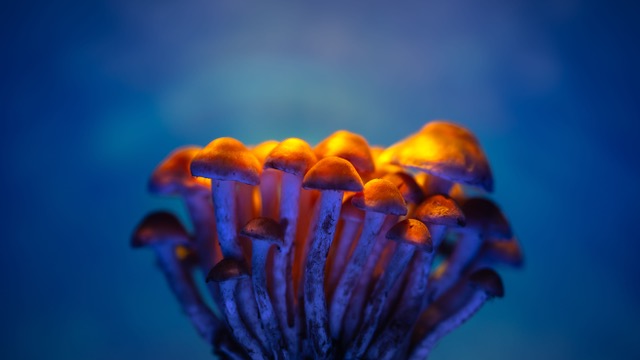
Psilocybin Mushrooms. Photo by Marek Piwnicki/pexels.com
Mexico allows for traditional and ceremonial use of psilocybin mushrooms, which are loosely defined in practice. The brand has a range of microdosing products ranging from teas to chocolates to tinctures and offers both psilocybin mushrooms – known as ‘Niños Santos’, or ‘Little Saints’ in Mexico – and wild-foraged Amanita muscaria mushroom tinctures among a range of functional mushroom and wellness products. You can even schedule a ‘microdose massage’ with them if you’re visiting their home base in the bucolic mountain hamlet of San Cristobal de Las Casas, and work with them internationally as microdosing consultants if you’re located elsewhere. The founder of Aleacion FUN also hosts the weekly Spanish language Mycopreneur Incubator and publishes the native Spanish Mycopreneur Newsletter, both of which serve the 500 million Spanish speaking people around the world with mushroom news and community building for mycopreneurs.
Though psilocybin products often sit in an unregulated gray area in most of the world, the popularity of microdosing continues to grow across borders. There are numerous jurisdictions where psilocybin is technically legal yet still beholden to a largely undeveloped market — Nepal is an example of this, as are places like The Bahamas and Brazil although a number of caveats exist to the ‘strictly legal’ definition in many of these countries. For example, the law in Brazil names Psilocybin and Psilocin as illicit compounds, while the mushrooms that contain them are not scheduled as an illicit substance.
This has led to the development of delivery services like Mush Mush Club in the country. In Indonesia, millions of tourists over the years have become familiar with the local psilocybin mushroom-infused milkshakes available in the Gili Islands or in the Balinese surf town of Kuta despite draconian prohibition of drugs and heavy-handed punishments in the country outside of these widely known offerings.
As the safety profile of psilocybin mushrooms has been widely established over millennia of real-world use and ample modern day clinical investigations, the narrative that researchers and scientists still need more data and funding to investigate these compounds skews towards regulatory capture and industry control rather than public health. If anything, the burden of proof is now on the clinical and pharmaceutical companies pushing highly regulated and largely exclusive legal psilocybin access pathways upon a global population that has already embraced the mushroom.
Dennis Walker is a global mushroom industry consultant and avid traveler. He is the founder of Mycopreneur, a platform dedicated to advancing the mushroom entrepreneurial ecosystem. His work has been featured in Rolling Stone. Forbes, Wired, Vice, High Times, and many other outlets. He is also the founder of Mycoday mushroom chocolate, an adaptogenic mushroom chocolate brand.


